CLIMATE OF OTTAWA:
Ottawa has a continental climate which means that their winters are colder and their summers are more humid. This is because unlike many of Ontario's cities, Ottawa does not sit on the shores of Lake Ontario. Since Ottawa does not sit near an ocean or shore, the heat that the water has does not have much of an effect on the climate of Ottawa.
From LOWERN, I have found that:
L: 45.4214° N, 75.6919° W Ottawa, Coordinates
We can tell that the sun's angle of isolation does not have an intense effect on Ottawa since the winters are very harsh and from that we know that the sunlight is not providing a high degree of heat due to the latitude of Ottawa.
N: Ottawa does not sit near any shores. It is a continental; not maritime.
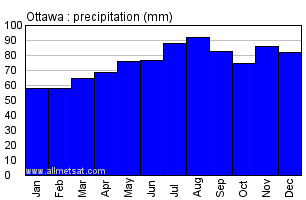
Below is a chart of precipitation for Ottawa, unlike Vancouver which has maritime climate, the ocean does not have much impact on the precipitation of Ottawa as stated earlier, it is continental.
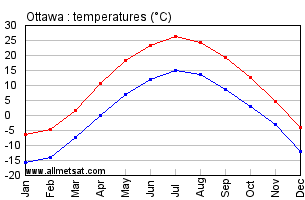
RED = Average high temperature | BLUE = Average low temperatures
Over the course of the year, the temperature varies from -15C to 26C and is rarely below -24C and above 31C (average daily high of 20C)
Warm seasons last from May 21 to September 17 and cold seasons last from December 3 to March 10 (average daily high of 0C)
Sunlight plays an important role for climate. The length of day with sunlight varies for Ottawa over the course of the year. The shortest day with sunlight is December 21 with 8:43 hours of daylight. The longest day is June with 15:40 hours of daylight. It looks like the sun doesn't deliver much energy to Ottawa in the wintertime.
Winds can vary over the course of the year. Due to the harsh climate in the winter, the winds can be very chilly and may be strong and in the summer the winds may vary from calm to cool, etc.
